
Σίκινος: Τοπίο και Μονοπάτια, μια Διαρκής Αφήγηση
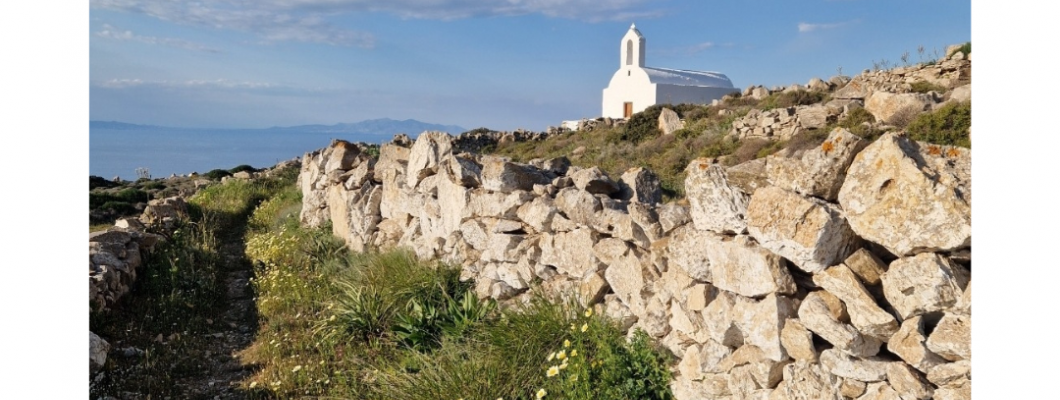
Η Σίκινος, ένα μικρό νησί που από ψηλά μοιάζει με έναν ομοιόμορφο καμβά, αποκαλύπτει τις αμέτρητες ομορφιές της μέσα από τις πτυχώσεις του τοπίου της. Αυτές οι φυσικές «διπλώσεις» δεν είναι απλώς γεωλογικά χαρακτηριστικά, αλλά κρύβουν ιστορίες, προστατεύουν τη φύση και φιλοξενούν μυστικά που περιμένουν να ανακαλυφθούν. Μέσα σε αυτές τις πτυχώσεις βρίσκουμε δέντρα προστατευμένα από τους ισχυρούς ανέμους, μαρμάρινα θεμέλια αρχαίων κατασκευών, εμβληματικές σκάλες από πέτρα και μάρμαρο, ξερολιθιές που αγκαλιάζουν τις καμπύλες των ρεμάτων, ακόμη και την ανάβλυση Βορεινό ή το πηγάδι έξω από τη Χώρα, όπου αγριοπερίστερα, γλάροι και κουρούνες αγναντεύουν το γραφικό οικισμό.
Οι πτυχώσεις αυτές, σαν τον χιτώνα ενός ελληνιστικού αγάλματος, υποδηλώνουν τη συνεχή κίνηση και τη ζωντανή ιστορία του νησιού. Κάθε πρωί στη Σίκινο, μια μελωδία ξυπνά τις αισθήσεις, καλώντας σε εξερεύνηση. Είναι η φωνή του ίδιου του τοπίου, μια συμφωνία από εκατό ξεχωριστές φωνές: των δέντρων, των ένδοξων αναμνήσεων του παρελθόντος, της θάλασσας, των ξωκλησιών. Και ανάμεσα σε όλες αυτές τις φωνές, μία ξεχωρίζει απόψε: τα μονοπάτια.
Τα Μονοπάτια: Η Μνήμη των Βημάτων και η Πολιτική του Τοπίου
Τα μονοπάτια της Σικίνου δεν είναι απλώς διαδρομές. Είναι η ζωντανή μνήμη των βημάτων ανθρώπων που περπάτησαν και εξακολουθούν να περπατούν σε αυτό το τοπίο. Όπως επισημαίνεται και από τον ρόλο ως αντιπρόεδρος της Ευρωπαϊκής Ομοσπονδίας Ορειβασίας, «τα μονοπάτια έχουν φωνή».
Αυτή η φωνή, η οποία αποτελεί τον πυρήνα της πολιτικής του τοπίου, μας υπενθυμίζει ότι ο Δήμαρχος της Σικίνου δεν είναι μόνο δήμαρχος των κατοίκων, αλλά και όλων των έμψυχων και άψυχων στοιχείων που συνθέτουν το τοπίο και εν τέλει, το νησί. Το τοπίο λειτουργεί ως ο μεγάλος ισολογισμός της ανθρωπότητας, ένα βιβλίο όπου καταγράφονται προσθήκες και αφαιρέσεις. Προσθέτουμε κτίρια, αλλά συχνά αφαιρούμε πόρους, βλάστηση, νερό.
Ωστόσο, τα μονοπάτια δεν υπόκεινται σε αυτόν τον κανόνα της πρόσθεσης-αφαίρεσης. Είναι αέναα. Υπάρχουν για εμάς και για τις επόμενες γενιές, αρκεί να τα συντηρούμε με σύνεση και σεβασμό. Μέσα από το μεγάλο, ανοιχτό βιβλίο του τοπίου και με αφορμή τα μονοπάτια, μπορούμε να αναδείξουμε πλήθος πτυχών και θεματικών: πολιτιστικών, ιστορικών, περιβαλλοντικών.
Τα μονοπάτια της Σικίνου απλώνονται σαν ένας ιστός αράχνης, αγκυροβολημένος σε όλες τις πλευρές του νησιού, ενωμένα και διαστελλόμενα, προσφέροντας αμέτρητες ευκαιρίες εξερεύνησης.
Νέες Πρωτοβουλίες και Μελλοντικές Προοπτικές
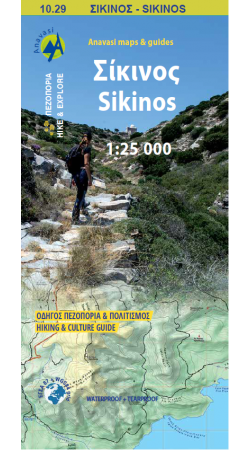
Είναι ιδιαίτερα ενθαρρυντικό το γεγονός ότι κυκλοφορεί ένας νέος χάρτης για τη Σίκινο, ενώ παράλληλα έχει αναπτυχθεί η εφαρμογή Sikinos Trails για λογαριασμό της ΕΛΛΕΤ και του Μουσείου Κυκλαδικής Τέχνης, στο πλαίσιο του προγράμματος "Cycladic Identity". Επιπλέον, η τοποθέτηση πινακίδων στα μονοπάτια ενισχύει την προσβασιμότητα και την εμπειρία των επισκεπτών.
Παράλληλα με το κύριο δίκτυο, υπάρχουν και μονοπάτια εκτός αυτού που έχουν, σε ορισμένα σημεία, κλείσει. Αυτό αναδεικνύει την ανάγκη για επέκταση της επιμέλειας και της συντήρησης του δικτύου μονοπατιών στο μέλλον, ώστε να μην χαθούν αυτές οι πολύτιμες διαδρομές που αποτελούν αναπόσπαστο κομμάτι της ταυτότητας και της ιστορίας του νησιού.
Η Σίκινος, μέσα από τις πτυχώσεις και τα μονοπάτια της, μας καλεί να την ανακαλύψουμε ξανά, να αφουγκραστούμε τις ιστορίες της και να συμβάλουμε στη διατήρηση αυτής της μοναδικής κληρονομιάς.
Ήβη Αδαμακοπούλου
Related Products