Η Γαλλική Επιστημονική Αποστολή του Μοριά: Ένα Ταξίδι στην Ιστορία και το Μέλλον της Πελοποννήσου
Σχεδόν 200 χρόνια μετά, η σπουδαία Γαλλική Επιστημονική Αποστολή του Μοριά (1829) έρχεται ξανά στο προσκήνιο! Με αφορμή αυτή την επέτειο,
το Γαλλικό Ινστιτούτο Ελλάδος, η Γαλλική Σχολή Αθηνών και το Ινστιτούτο Ιστορικών Ερευνών του Εθνικού Ιδρύματος Ερευνών διοργανώνουν μια σημαντική ημερίδα, με τη συμμετοχή του εκδοτικού Οίκου Ανάβαση.
- Ημερομηνία: Παρασκευή 10 Οκτωβρίου 2025.
-
Ώρες: 09:00-19:00.
Τόπος: Auditorium Theo Angelopoulos, στο Γαλλικό Ινστιτούτο Ελλάδος (Σίνα 31).
-
Είσοδος: Ελεύθερη, με ταυτόχρονη μετάφραση.
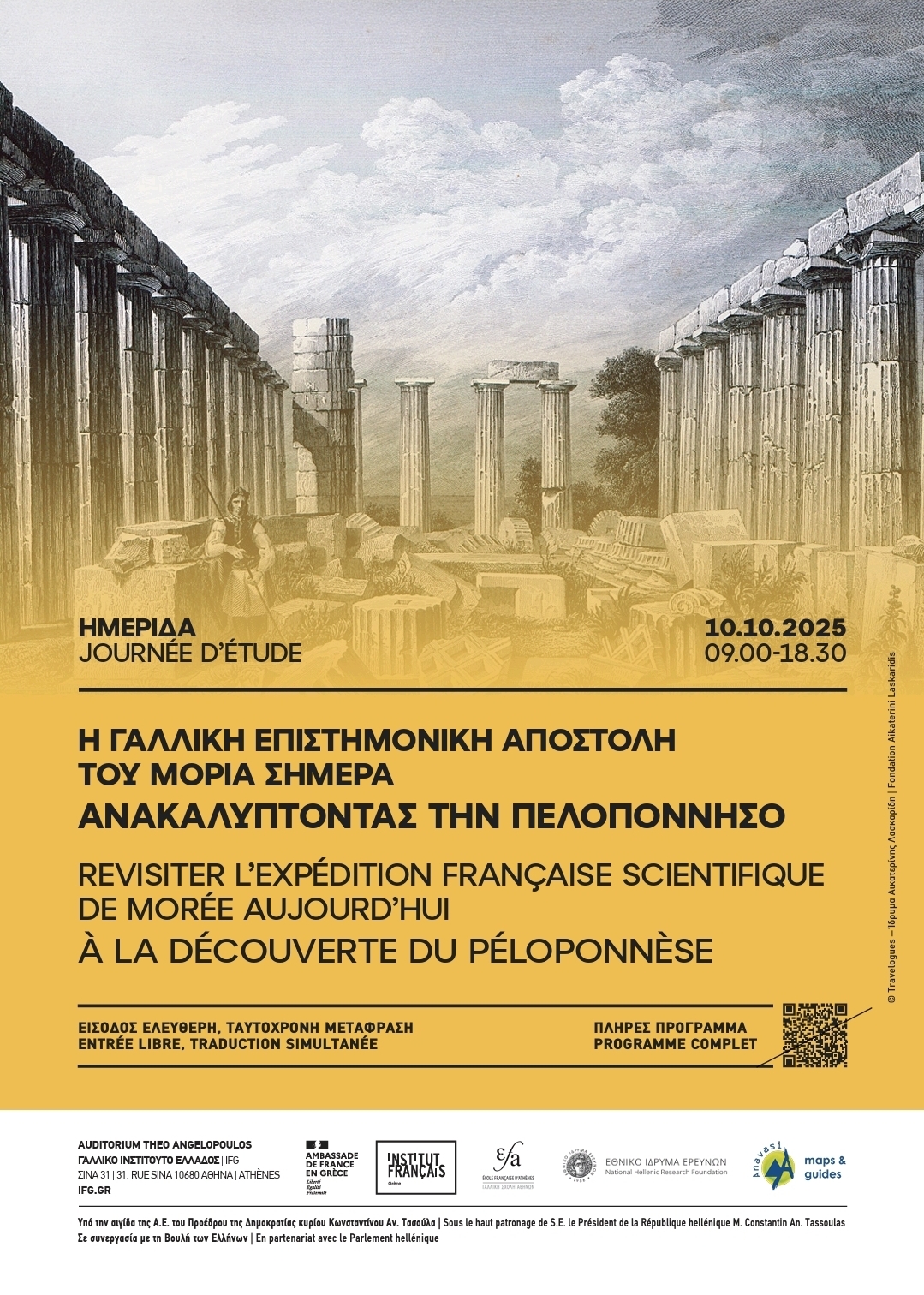
Η ημερίδα τελεί υπό την αιγίδα της Α.Ε. του Προέδρου της Δημοκρατίας κυρίου Κωνσταντίνου Αν. Τασούλα και σε συνεργασία με τη Βουλή των Ελλήνων. Είναι η πρώτη δράση μιας σειράς που θα κορυφωθεί το 2029.
Στις 3 Μαρτίου 1829, είκοσι Γάλλοι επιστήμονες, κατόπιν αιτήματος του κυβερνήτη Καποδίστρια, αποβιβάστηκαν στο Ναυαρίνο. Η αποστολή τους ήταν διττή:
Να γνωρίσουν και να μελετήσουν σε βάθος τον ελληνικό πολιτισμό και τη φύση.
Να προσφέρουν στην ελληνική διοίκηση σύγχρονα εργαλεία διαχείρισης και ανάπτυξης.
Οι επιστήμονες (γεωγράφοι, φυσιοδίφες, αρχιτέκτονες και λόγιοι-ελληνιστές) εξερεύνησαν κυρίως την Πελοπόννησο, αλλά και τις Κυκλάδες και την Αττική για να χαρτογραφήσουν και να κάνουν συλλογή στοιχείων για τη δημογραφία, τους φυσικούς πόρους, τις υποδομές, τη φύση και τις αρχαιότητες του υπό ίδρυση ελληνικού κράτους.
Τα πορίσματα κυκλοφόρησαν σε χάρτες και οκτώ επιβλητικούς τόμους μεταξύ 1831 και 1838.
Η Αποστολή αποτέλεσε ένα πλήρες αποτύπωμα της Πελοποννήσου αμέσως μετά την Επανάσταση, εισάγοντας νέες επιστήμες και τεχνολογίες αιχμής, όπως η στατιστική δημογραφία και η γεωδαισία.
Η ημερίδα στοχεύει να μνημονεύσει και να σχολιάσει το σημαντικό αυτό έργο, διερευνώντας το επιστημονικό του αποτύπωμα και την επίδρασή του στις μεταγενέστερες διεπιστημονικές προσεγγίσεις
Η Ανάβαση δεν συμμετέχει απλώς στη διοργάνωση, αλλά έχει και ενεργό ρόλο στις εργασίες, η Πηνελόπη Ματσούκα (Εκδόσεις Ανάβαση) συντονίζει την Τέταρτη Συνεδρία (17:00 – 18:30) με θέμα:
- «Από το Παρελθόν στο Παρόν: Η Εξέλιξη της Χαρτογραφίας στον 21ο Αιώνα».
Στη συνεδρία αυτή, ο Άγγελος Αδαμακόπουλος (Ubicarta, Δημιουργός της εφαρμογής IGN RANDO) θα μιλήσει για τη Γεωπληροφορική και τις εφαρμογές για το μέλλον της χαρτογραφίας.
Ελάτε να εξερευνήσουμε μαζί την ιστορία, την επιστήμη και την απήχηση αυτού του μοναδικού έργου!
Αναλυτικό πρόγραμμα:
Η Γαλλική Επιστημονική Αποστολή του Μοριά σήμερα: Ανακαλύπτοντας την Πελοπόννησο
Παρασκευή 10 Οκτωβρίου 2025, 09.00-19.00,
Auditorium Theo Angelopoulos - Γαλλικό Ινστιτούτο Ελλάδος – Σίνα 31
*Υπό την αιγίδα της Α.Ε. του Προέδρου της Δημοκρατίας κυρίου Κωνσταντίνου Αν. Τασούλα
*Σε συνεργασία με τη Βουλή των Ελλήνων
Eίσοδος ελεύθερη | Ταυτόχρονη μετάφραση
Το Γαλλικό Ινστιτούτο Ελλάδος, η Γαλλική Σχολή Αθηνών και το Ινστιτούτο Ιστορικών Ερευνών του Εθνικού
Ιδρύματος Ερευνών διοργανώνουν, με τη συμμετοχή του εκδοτικού Οίκου Ανάβαση, την Παρασκευή 10
Οκτωβρίου 2025, ημερίδα με θέμα τη «Γαλλική Επιστημονική Αποστολή του Μοριά», που
πραγματοποιήθηκε στην Πελοπόννησο το 1829.
Σχεδόν 200 χρόνια από τη σημαντική αυτή Αποστολή, στόχος της ημερίδας είναι να μνημονεύσουμε και να
σχολιάσουμε το σημαντικό έργο που επιτέλεσε, να διερευνήσουμε το επιστημονικό αποτύπωμα των
εργασιών αλλά και τους τρόπους με τους οποίους επέδρασε στις μεταγενέστερες διεπιστημονικές αλλά
και περιηγητικές προσεγγίσεις του χώρου.
Η ημερίδα αυτή θα είναι η πρώτη μιας σειράς δράσεων που θα ολοκληρωθούν το 2029.
Επιστημονική και Οργανωτική Επιτροπή
- Matthieu Abgrall, Μορφωτικός ακόλουθος για την επιστημονική και πανεπιστημιακή συνεργασία,
Αναπληρωτής διευθυντής του Γαλλικού Ινστιτούτου Ελλάδας
- Véronique Chankowski, Διευθύντρια της Γαλλικής Σχολής Αθηνών
- Gilles de Rapper, Διευθυντής του Τομέα νεώτερων και σύγχρονων σπουδών της Γαλλικής Σχολής
Αθηνών
- Ουρανία Πολυκανδριώτη, Διευθύντρια ερευνών, Ινστιτούτο Ιστορικών Ερευνών / Εθνικό Ίδρυμα
Ερευνών, Συντονίστρια του Τομέα Νεοελληνικών Ερευνών – ΙΙΕ/ΕΙΕ
- Γιώργος Τόλιας, Καθηγητής, École Pratique des Hautes Études, Παρίσι – πρώην Διευθυντής
ερευνών, Ινστιτούτο Ιστορικών Ερευνών / Εθνικό Ίδρυμα Ερευνών
- Γιάννης Σαΐτας, Αρχιτέκτονας, Πολεοδόμος, Εθνολόγος. 'Ερευνα, σχεδιασμός, επιμέλεια της
έκδοσης "Το έργο της Γαλλικής Επιστημονικής Αποστολής του Μοριά 1829-1838, Μέρος Α', 2011
και Μέρος Β', 2017, εκδ. οίκος Μέλισσα ".
- Κατερίνα Σπυροπούλου, Αναπληρώτρια του Μορφωτικού Ακόλουθου για την επιστημονική και
πανεπιστημιακή συνεργασία, Γαλλικό Ινστιτούτο Ελλάδας
- Ήβη Αδαμακοπούλου, Εκδόσεις Ανάβαση
Η γαλλική επιστημονική αποστολή του Μοριά
Στις 3 Μαρτίου 1829, είκοσι Γάλλοι επιστήμονες, γεωγράφοι, φυσιοδίφες, αρχιτέκτονες και λόγιοι-
ελληνιστές, κατόπιν αιτήματος του κυβερνήτη Καποδίστρια, αποβιβάσθηκαν στο Ναυαρίνο, που είχε μόλις
απελευθερωθεί από τα στρατεύματα του Ιμπραήμ (1827) και τη γαλλική στρατιωτική αποστολή υπό τον
στρατηγό Maison (1828), προκειμένου να εξερευνήσουν την Ελλάδα. Στόχος τους ήταν αφενός να
γνωρίσουν σε βάθος τη φύση και τον πολιτισμό της Ελλάδας και αφετέρου να προσφέρουν στην ελληνική
διοίκηση σύγχρονα εργαλεία διαχείρισης και ανάπτυξης. Οι Γάλλοι επιστήμονες εξερεύνησαν κατά κύριο
λόγο την Πελοπόννησο, αλλά και τις Κυκλάδες και την Αττική. Χαρτογράφησαν τον τόπο και συνέλεξαν
στοιχεία σχετικά με τη δημογραφία, τους φυσικούς πόρους και τις υποδομές, τη φύση και τις αρχαιότητες
του υπό ίδρυση ελληνικού κράτους.
Η Γαλλική Επιστημονική Αποστολή του Μοριά απαρτιζόταν από τρία Τμήματα ειδικών στις φυσικές
επιστήμες, την αρχαιολογία και τις καλές τέχνες και έναν Τοπογραφικό Λόχο 25 μηχανικών του στρατού.
Τα πορίσματα των εργασιών κυκλοφόρησαν σε χάρτες και σε 8 επιβλητικούς τόμους μεταξύ των ετών
1831 και 1838, οι οποίοι συνοδεύονται από σημαντική εικονογραφική και χαρτογραφική τεκμηρίωση.
Η σημασία της Αποστολής είναι πολλαπλή. Προσφέρει μια πλήρη και διεξοδική αποτύπωση της
Πελοποννήσου και άλλων περιοχών ακριβώς μετά την Επανάσταση, η οποία αποτελεί παράδειγμα της
επιστημονικής μεθοδολογίας της εποχής και της ανάδυσης νέων επιστημών και των τεχνολογιών αιχμής,
όπως η στατιστική δημογραφία και η γεωδαισία, η ερμηνεία της γεωλογικής διαμόρφωσης και του
δικτύου των υδάτινων πόρων, η ανασκαφή και η τοπογραφική τεκμηρίωση των μνημείων, η απογραφή
των ορυκτών, της πανίδας και της χλωρίδας.
Με την ολοκλήρωση των δράσεων στην επέτειο των 200 χρόνων από την πραγματοποίηση της Αποστολής,
θέλουμε να πιστεύουμε ότι θα έχουμε καλύψει όλες τις πτυχές του επιστημονικού της έργου και θα
έχουμε αναδείξει τη σημερινή του απήχηση και συνέχεια.
ΠΡΟΓΡΑΜΜΑ ΤΗΣ ΗΜΕΡΙΔΑΣ
│ 9:00 – 10:00 │
ΕΝΑΡΚΤΗΡΙΟΙ ΧΑΙΡΕΤΙΣΜΟΙ
Πρεσβεία της Γαλλίας στην Ελλάδα, Γαλλική Σχολή Αθηνών, Εθνικό Ίδρυμα Ερευνών, Υπουργείο
Πολιτισμού
ΕΙΣΑΓΩΓΗ
Η έκδοση «Το έργο της Γαλλικής Επιστημονικής Αποστολής του Μοριά 1829-1838, Μέρος Α', 2011 και
Μέρος Β', 2017, εκδ. οίκος Μέλισσα».
Γιάννης ΣΑΪ́ΤΑΣ (Αρχιτέκτονας, Πολεοδόμος, Εθνολόγος)
│ 10:00 – 11:30 │ ΠΡΩΤΗ ΣΥΝΕΔΡΙΑ – ΤΟ ΧΑΡΤΟΓΡΑΦΙΚΟ ΕΡΓΟ
Συντονιστής: Matthieu ABGRALL (Ακόλουθος επιστημονικής και πανεπιστημιακής συνεργασίας,
Αναπληρωτής Διευθυντής του Γαλλικού Ινστιτούτου Ελλάδος)
Οι γεωδαιτικές εργασίες του Μοριά (1829-1830) ως θεμέλιο για την χαρτογράφηση
Pierre BRIOLE, (Διευθυντής Έρευνας CNRS, Ecole Normale Supérieure Paris)
Γεωγραφίες του πιθανού: κοινωνία, περιβάλλον και εθνική ταυτότητα στο έργο της Επιστημονικής
Αποστολής του Μοριά (1829)
Γιώργος ΤΌΛΙΑΣ (Καθηγητής, École Pratique des Hautes Études, Πρώην Διευθυντής Ερευνών, Ινστιτούτο
Ιστορικών Ερευνών - Εθνικό Ίδρυμα Ερευνών)
Ψηφιακή ανασυγκρότηση του χαρτογραφικού έργου της Γαλλικής Επιστημονικής Αποστολής
Ελένη ΓΚΑΔΟΛΟΥ (Digital Asset Manager, Βρετανική Σχολή Αθηνών, Διδάκτωρ Γεωγραφίας, Αγρονόμος και
Τοπογράφος Μηχανικός)
Ο χάρτης της Γαλλικής Επιστημονικής Αποστολής ως τεκμήριο για τη μελέτη των οικισμών και του
πληθυσμού της Πελοποννήσου στην περίοδο της Επανάστασης: ερευνητικά αποτελέσματα και μελλοντικές
προοπτικές
Μιχάλης ΦΕΣΤΑΣ (Μεταδιδακτορικός ερευνητής στο Ινστιτούτο Ιστορικών Ερευνών (ΙΙΕ) του Εθνικού
Ιδρύματος Ερευνών (EIE), μέλος του Εργαστηρίου Ψηφιακής Ιστορικής Χαρτογραφίας ΙΙΕ/ΕΙΕ)
│ 12:00 – 13:30 │ ΔΕΥΤΕΡΗ ΣΥΝΕΔΡΙΑ – ΕΠΙΣΤΗΜΕΣ ΤΗΣ ΖΩΗΣ ΚΑΙ ΤΗΣ ΓΗΣ
Συντονιστής: Gilles DE RAPPER (Διευθυντής Σπουδών – Τομέας Νεότερης και Σύγχρονης Εποχής)
Η Βοτανική Αποστολή στην Πελοπόννησο
Σοφία ΡΙΖΟΠΟΥΛΟΥ (Ομότιμη Καθηγήτρια Οικοφυσιολογίας Φυτών, Τμήμα Βιολογίας, Τομέας Βοτανικής,
Εθνικό και Καποδιστριακό Πανεπιστήμιο Αθηνών, Υπεύθυνη του προγράμματος ΚΕΔΙΒΙΜ « Πολιτισμική
Βοτανική»)
Η Επιστημονική Αποστολή του Μοριά: οι απαρχές της γεωαρχαιολογικής προσέγγισης
Eric FOUACHE (Καθηγητής, Sorbonne Université - UR Médiations)
και Antoine CHABROL (Υποψήφιος Διδάκτορας, Sorbonne Université -UR Médiations)
Η Αποστολή του Μοριά στο Φυτολόγιο του Εθνικού Μουσείου Φυσικής Ιστορίας του Παρισιού
Clémence PAGNOUX (Αναπληρώτρια καθηγήτρια του Εθνικού Μουσείου Φυσικής Ιστορίας, BioArch UMR
7209 MNHN CNRS Inrap, Paris)
│ 15:00 – 17:00 │ ΤΡΙΤΗ ΣΥΝΕΔΡΙΑ – ΙΣΤΟΡΙΑ ΚΑΙ ΑΡΧΑΙΟΛΟΓΙΑ
Συντονίστρια: Ουρανία ΠΟΛΥΚΑΝΔΡΙΏΤΗ (Διευθύντρια ερευνών, Ινστιτούτο Ιστορικών Ερευνών / Εθνικό
Ίδρυμα Ερευνών)
Επιστολές, τύπος, βιβλία, για την αγάπη της Ελλάδας.
Ο Αμπρουάζ Φιρμέν-Ντιντό και η Επιστημονική Αποστολή του Μορέα.
Emmanuelle COLLAS (Ιστορικός, Διδάκτωρ Φιλολογίας και Αναπληρώτρια καθηγήτρια Ελληνικής Ιστορίας,
εκδότρια)
Μια διαφορετική επιστημονική αποστολή του Μοριά: ο «ταπεινός» Βιεττύ ανακαλύπτει την Πελοπόννησο
Clémence WEBER-PALLEZ (Αναπληρώτρια καθηγήτρια Ελληνικής Ιστορίας, Laboratoire PLH - Université
Toulouse 2 Jean Jaurès)
Η δημοσιογραφική περιπέτεια του Raybaud στην Ελλάδα
Vincent TOUZE (Διδάκτωρ Πολιτικών Επιστημών, Πτυχιούχος ανώτατων σπουδών δημόσιας διοίκησης)
│ 17:00 – 18:30 │ ΤΕΤΑΡΤΗ ΣΥΝΕΔΡΙΑ – ΑΠΟ ΤΟ ΠΑΡΕΛΘΟΝ ΣΤΟ ΠΑΡΟΝ. Η ΕΞΕΛΙΞΗ ΤΗΣ ΧΑΡΤΟΓΡΑΦΙΑΣ
ΣΤΟΝ 21 ο ΑΙΩΝΑ
Συντονίστρια: Πηνελόπη ΜΑΤΣΟΥΚΑ (Εκδόσεις Ανάβαση)
Γεωπληροφορική και εφαρμογές για το μέλλον της χαρτογραφίας
Άγγελος ΑΔΑΜΑΚΟΠΟΥΛΟΣ (Δημιουργός της εφαρμογής IGN RANDO)
Μοντελοποιώντας την ανάγνωση χαρτών
Βασίλης ΚΡΑΣΑΝΑΚΗΣ (Αναπληρωτής Καθηγητής, Παν. Δυτικής Αττικής, Διδάκτωρ Μηχανικός ΕΜΠ,
Διπλωματούχος Αγρονόμος και Τοπογράφος Μηχανικός ΕΜΠ )
Προκλήσεις στη Χαρτογραφία του Μέλλοντος: Τεχνητή Νοημοσύνη και Μεγάλα Γεωχωρικά Δεδομένα
Χρίστος ΧΑΛΚΙΑΣ (Καθηγητής, Χαροκόπειο Πανεπιστήμιο)
ΚΑΤΑΛΟΓΟΣ ΣΥΜΜΕΤΕΧΟΝΤΩΝ :
- Matthieu ABGRALL (Ακόλουθος επιστημονικής και πανεπιστημιακής συνεργασίας, Αναπληρωτής
Διευθυντής του Γαλλικού Ινστιτούτου Ελλάδος)
- Άγγελος ΑΔΑΜΑΚΟΠΟΥΛΟΣ (Δημιουργός της εφαρμογής IGN RANDO)
- Ήβη ΑΔΑΜΑΚΟΠΟΥΛΟΥ (Εκδόσεις Ανάβαση)
- Pierre BRIOLE, (Διευθυντής Έρευνας CNRS, Ecole Normale Supérieure Paris)
- Antoine CHABROL (Υποψήφιος Διδάκτορας, Sorbonne Université -UR Médiations)
- Χρίστος ΧΑΛΚΙΑΣ (Καθηγητής,Χαροκόπειο Πανεπιστήμιο)
- Emmanuelle COLLAS (Ιστορικός, Διδάκτωρ Φιλολογίας και Αναπληρώτρια καθηγήτρια Ελληνικής
Ιστορίας, εκδότρια)
- Μιχάλης ΦΕΣΤΑΣ (Μεταδιδακτορικός ερευνητής στο Ινστιτούτο Ιστορικών Ερευνών (ΙΙΕ) του
Εθνικού Ιδρύματος Ερευνών (EIE), μέλος του Εργαστηρίου Ψηφιακής Ιστορικής Χαρτογραφίας
ΙΙΕ/ΕΙΕ)
- Eric FOUACHE (Καθηγητής, Sorbonne Université - UR Médiations)
- Ελένη ΓΚΑΔΟΛΟΥ (Digital Asset Manager, Βρετανική Σχολή Αθηνών, Διδάκτωρ Γεωγραφίας,
Αγρονόμος και Τοπογράφος Μηχανικός)
- Βασίλης ΚΡΑΣΑΝΑΚΗΣ (Αναπληρωτης Καθηγητής, Παν. Δυτικής Αττικής, Διδάκτωρ Μηχανικός
ΕΜΠ, Διπλωματούχος Αγρονόμος και Τοπογράφος Μηχανικός ΕΜΠ )
- Πηνελόπη ΜΑΤΣΟΥΚΑ (Εκδόσεις Ανάβαση)
- Clémence PAGNOUX (Αναπληρώτρια καθηγήτρια του Εθνικού Μουσείου Φυσικής Ιστορίας,
BioArch UMR 7209 MNHN CNRS Inrap, Paris)
- Ουρανία ΠΟΛΥΚΑΝΔΡΙΩΤΗ (Διευθύντρια ερευνών, Ινστιτούτο Ιστορικών Ερευνών / Εθνικό Ίδρυμα
Ερευνών)
- Gilles DE RAPPER (Διευθυντής Σπουδών – Τομέας Νεότερης και Σύγχρονης Εποχής)
- Σοφία ΡΙΖΟΠΟΥΛΟΥ (Ομότιμη Καθηγήτρια Οικοφυσιολογίας Φυτών, Τμήμα Βιολογίας, Τομέας
Βοτανικής, Εθνικό και Καποδιστριακό Πανεπιστήμιο Αθηνών, Υπεύθυνη του προγράμματος
ΚΕΔΙΒΙΜ « Πολιτισμική Βοτανική»)
- Γιάννης ΣΑΪΤΑΣ (Αρχιτέκτονας, Πολεοδόμος, Εθνολόγος)
- Γιώργος ΤΟΛΙΑΣ (Καθηγητής, École Pratique des Hautes Études, Πρώην Διευθυντής Ερευνών,
Ινστιτούτο Ιστορικών Ερευνών - Εθνικό Ίδρυμα Ερευνών)
- Vincent TOUZE (Διδάκτωρ Πολιτικών Επιστημών, Πτυχιούχος ανώτατων σπουδών δημόσιας
διοίκησης)
- Clémence WEBER-PALLEZ (Αναπληρώτρια καθηγήτρια Ελληνικής Ιστορίας, Laboratoire PLH -
Université Toulouse 2 Jean Jaurès)